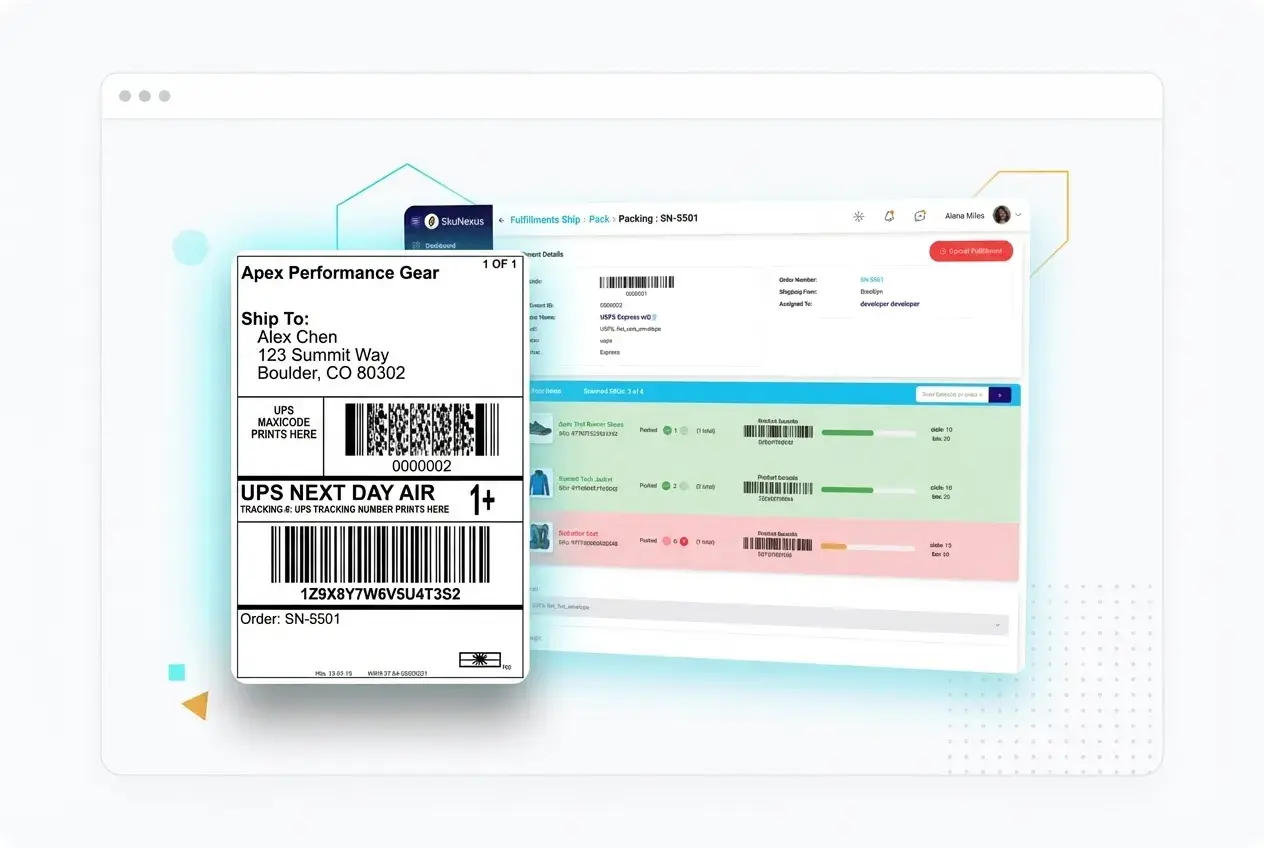
Split Fulfillment, Solved. Ship From Anywhere, Automatically.
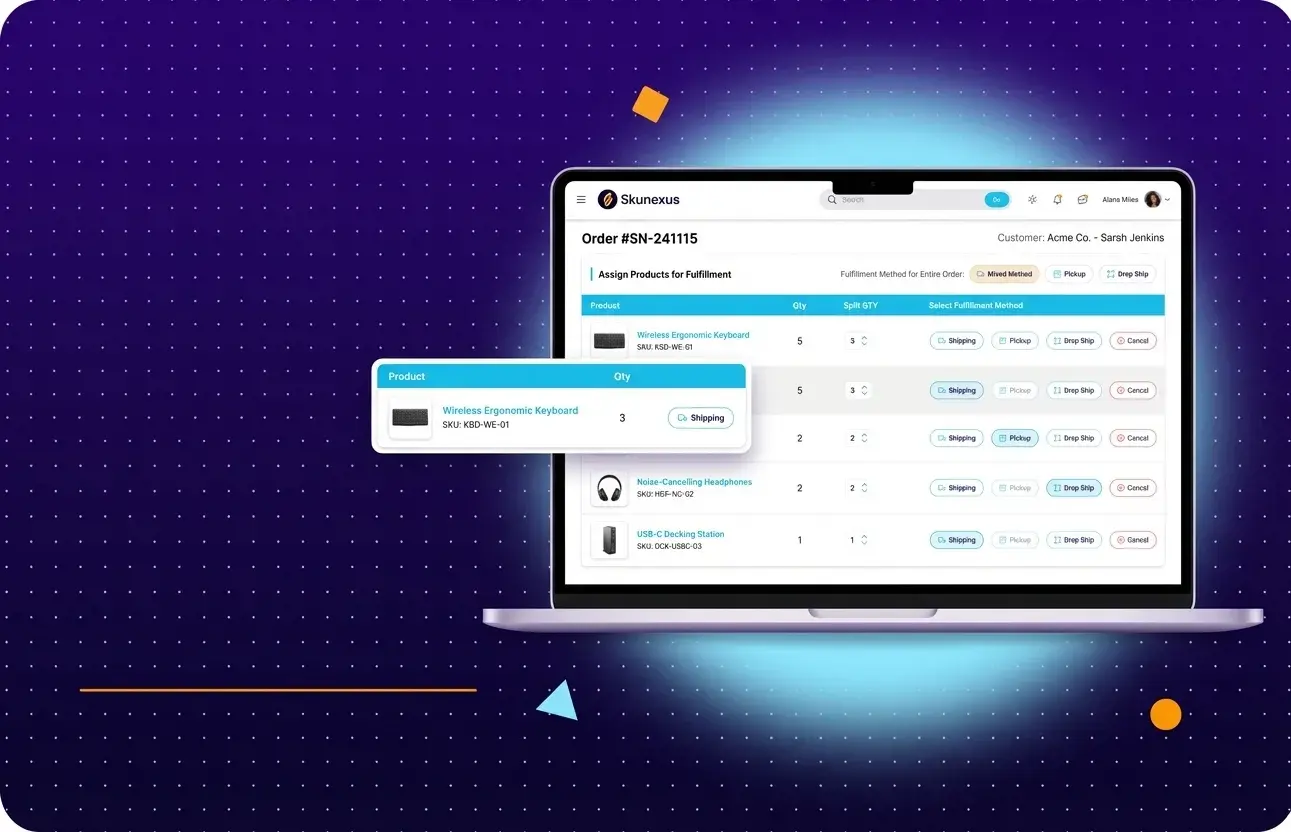
One order. Three items. One ships from your warehouse, one dropships from a vendor, and the customer picks up the third at your store. Most systems can't handle this. SkuNexus handles it automatically.
What is Fulfillment Management Software?
Fulfillment management software orchestrates the complete journey from order received to package delivered — across your warehouses, vendors, retail stores, and 3PL partners. It handles the complexity of split fulfillment, returns, and multi-source coordination.
Modern fulfillment isn't one warehouse shipping every order. It's a network of fulfillment sources — your warehouse, dropship vendors, retail stores for BOPIS, 3PL partners — all needing to coordinate on every order. Fulfillment management software makes this complexity invisible to your team and your customers.
SkuNexus integrates fulfillment management directly with order routing and warehouse operations in one platform. There's no handoff between systems, no sync delay, and no gap where orders get lost.
Key Capabilities
- Automatic split fulfillment across sources
- Dropship vendor automation
- BOPIS (Buy Online, Pick Up In Store)
- 3PL coordination and tracking
Trusted by leading brands processing millions of orders
Sound Familiar?
"We sell from our warehouse AND from vendors. When an order has both, we split it manually."
Manual split fulfillment takes 10-15 minutes per order and is the most error-prone part of your operation.
Manual Splitting"Our tool literally can't do split orders. We tried."
You're stuck choosing: fulfill everything yourself or route everything to vendors. Neither is efficient.
No Split Support"We're bringing fulfillment back from our 3PL. Some SKUs are here, some are still there."
The hybrid period between 3PL and in-house requires a system that can route to multiple sources simultaneously.
3PL TransitionThere's a better way
SkuNexus splits, routes, and tracks fulfillment across every source — warehouse, vendor, store, 3PL — automatically.
See How It WorksHow Fulfillment Management Works in SkuNexus
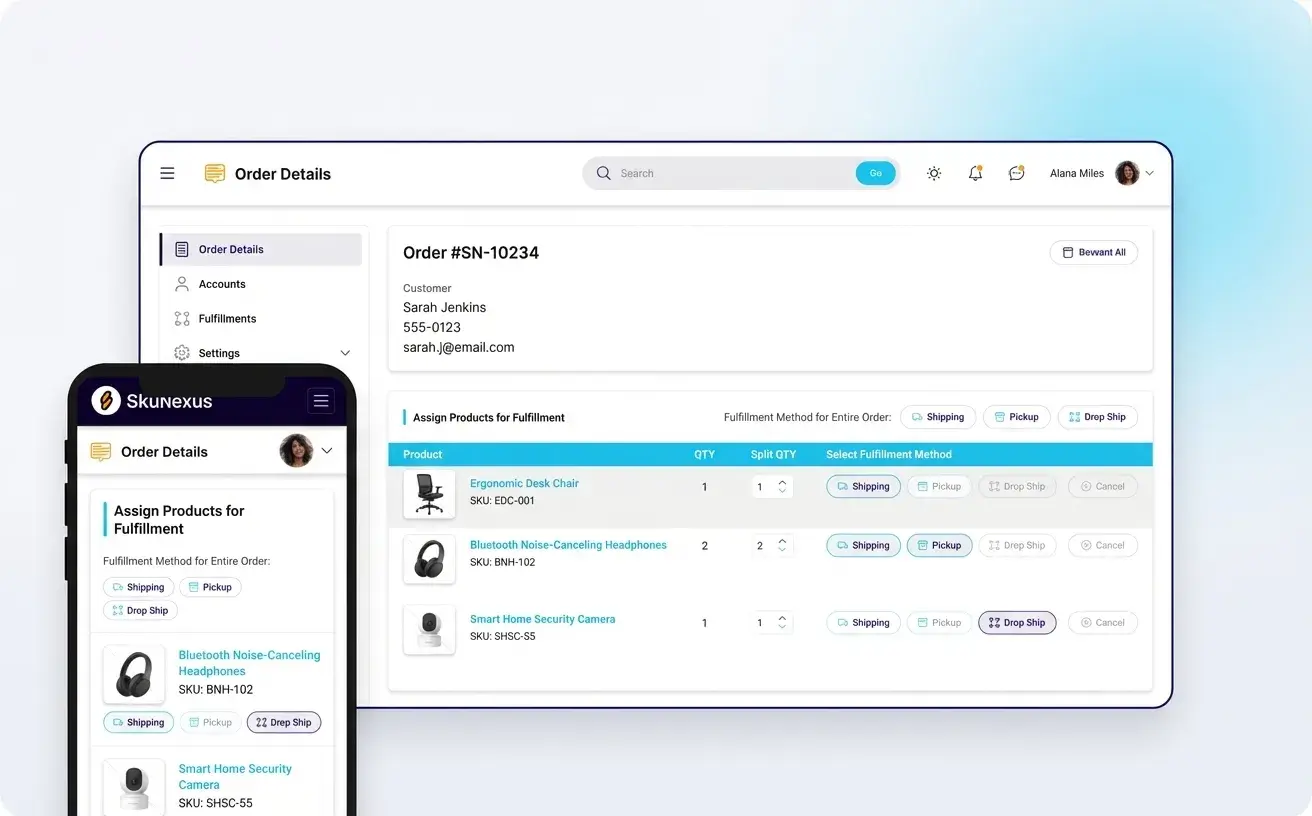
Step 1: Order Arrives, Decision Engine Evaluates
Every order flows through the Auto-Decision Engine first. The engine looks at each line item and determines the optimal fulfillment source: your warehouse, a vendor, a retail store, or a 3PL. If different items need different sources, the engine splits the order automatically.
Step 2: Each Fulfillment Path Executes Simultaneously
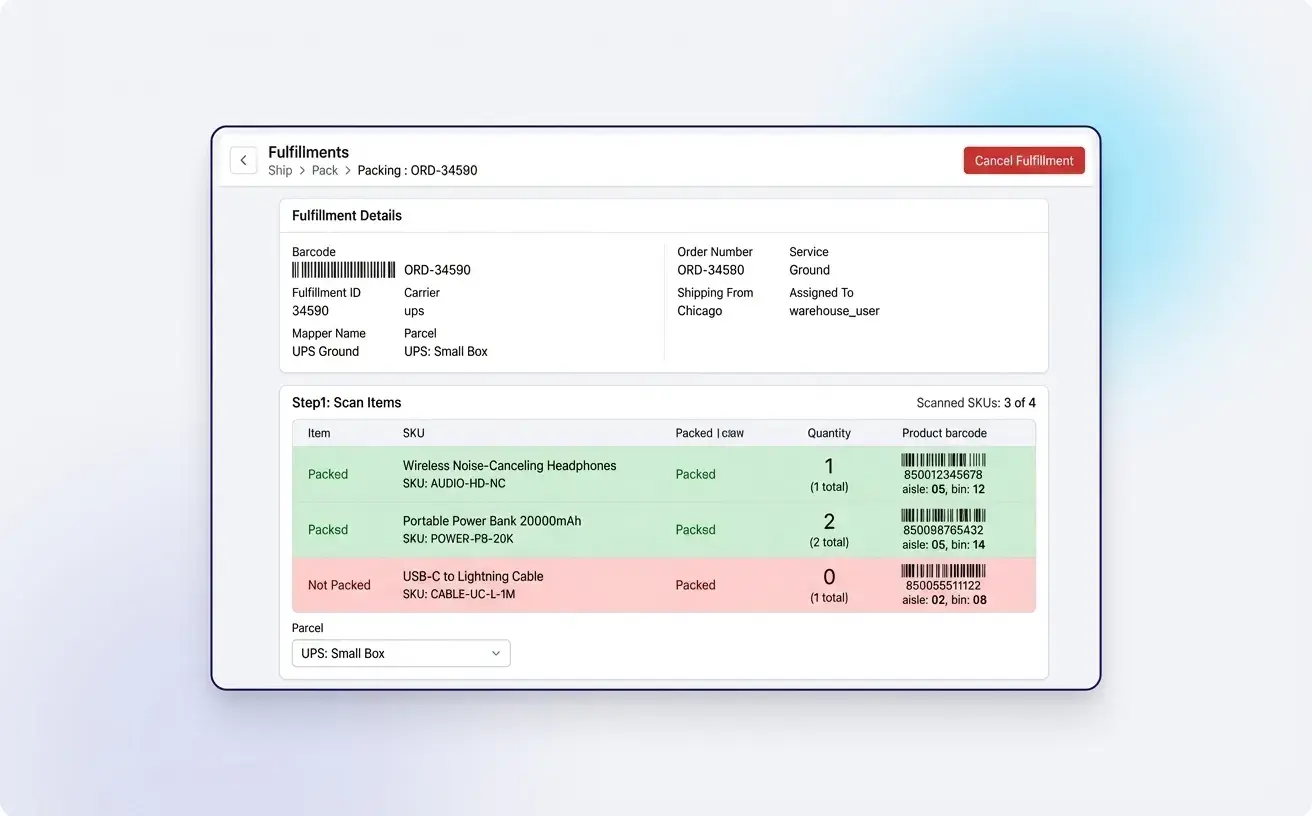
Once the split happens, each fulfillment task runs independently and in parallel. Warehouse items enter the pick queue immediately. Vendor dropship items trigger an automated notification or PO. Neither path waits for the other.
Step 3: Tracking Converges for the Customer
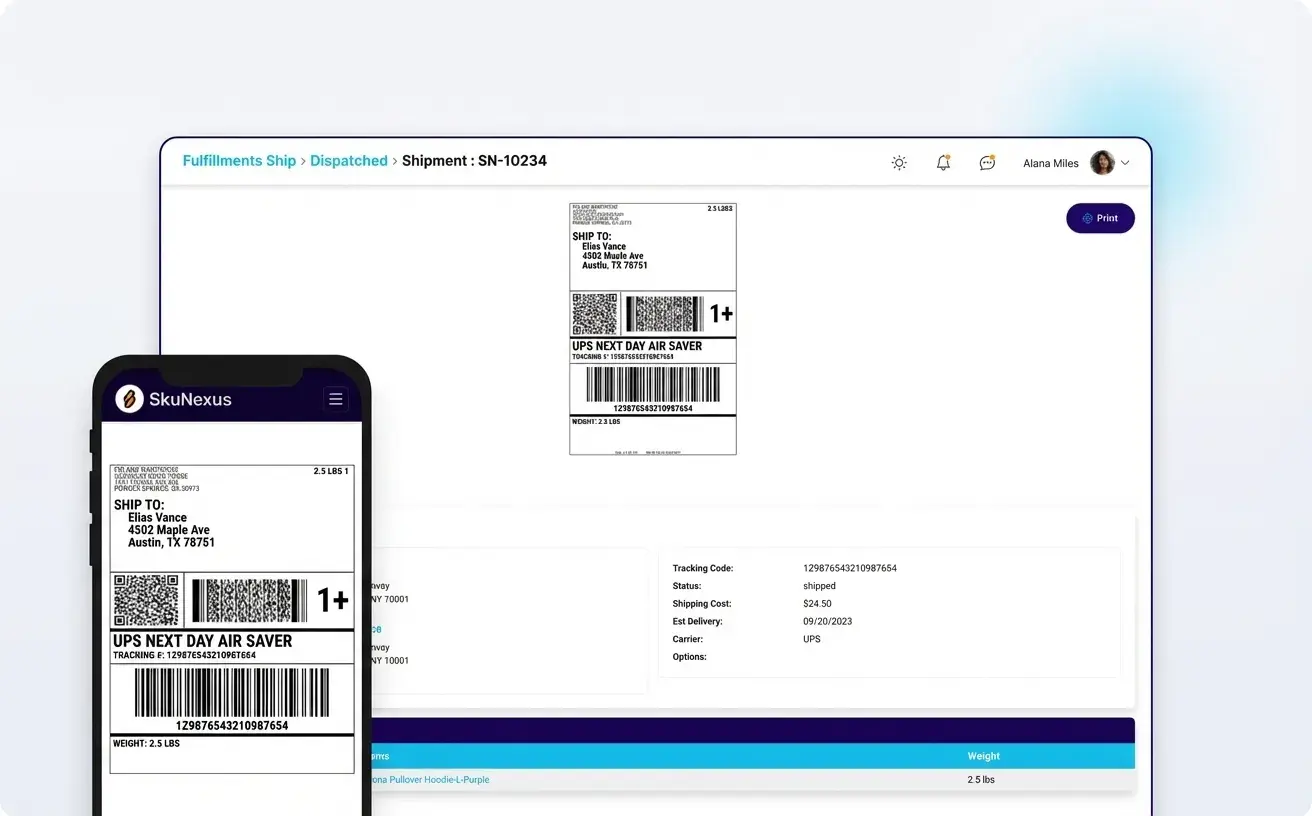
As each fulfillment piece ships, SkuNexus captures tracking and pushes it back to the sales channel. The customer sees all tracking numbers for their order — one from your warehouse, one from the vendor. Transparent and automatic.
Step 4: Returns Complete the Cycle
When items come back, SkuNexus routes them through inspection and back into inventory — or into quarantine if damaged. Returns are tracked against the original order. Vendor-sourced items follow their own return path based on your agreements.
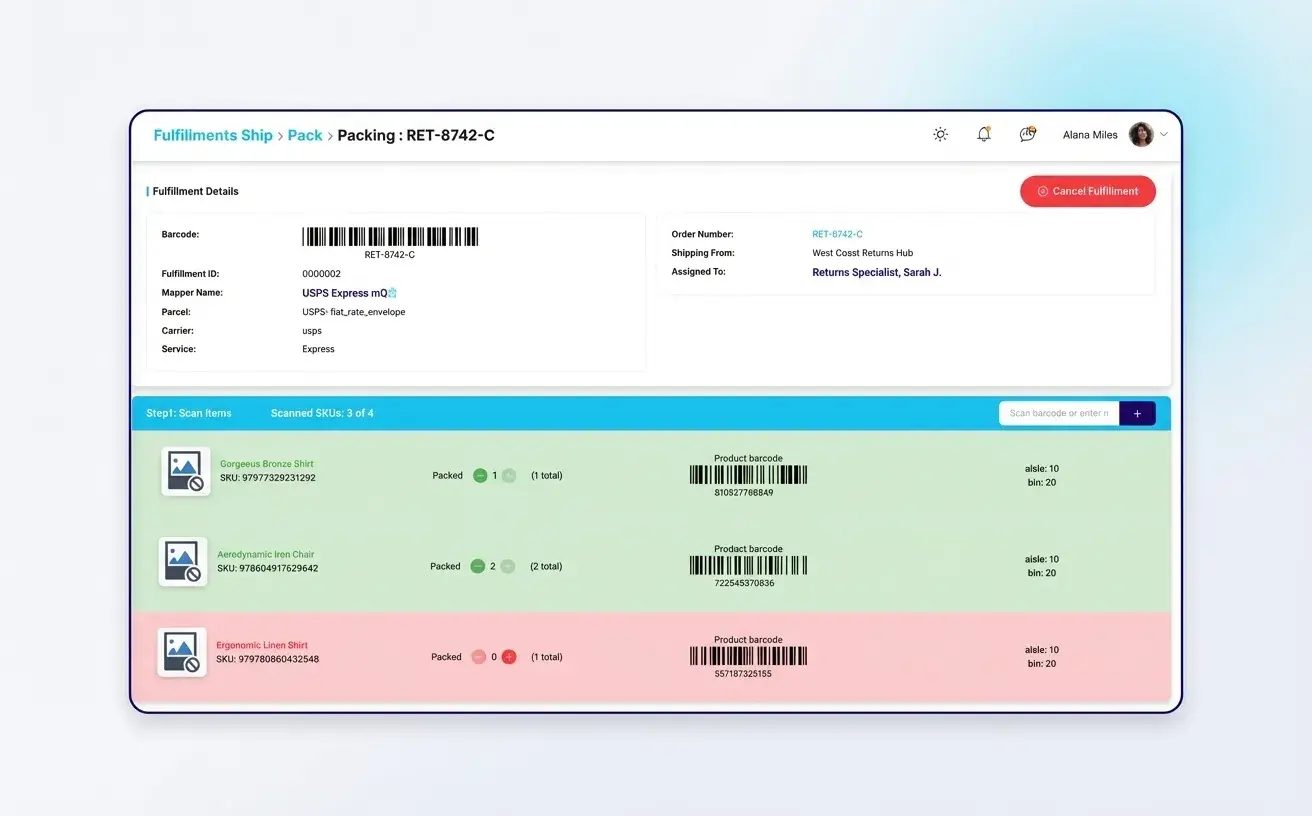
Everything You Need for Fulfillment Operations
Why Teams Choose SkuNexus
Automatic Split Fulfillment
One order, multiple sources — handled automatically. Ship from warehouse while vendors dropship, all on the same order.
Dropship Automation
Vendor orders are generated and sent automatically. Track vendor acceptance, shipping confirmation, and delivery.
BOPIS Support
Full pickup workflow: order routed to store → items picked → customer notified → pickup confirmed → order closed.
3PL Coordination
Managing fulfillment across your own warehouse and one or more 3PLs? SkuNexus routes orders to the right facility and tracks status across all locations.
3PL locations function like any other fulfillment location. The routing engine sends orders based on the same rules used for your own warehouses.
- 3PLs treated as native fulfillment locations
- Same routing rules as own warehouses
- Real-time fulfillment status tracking
- API, EDI, or manual integration options
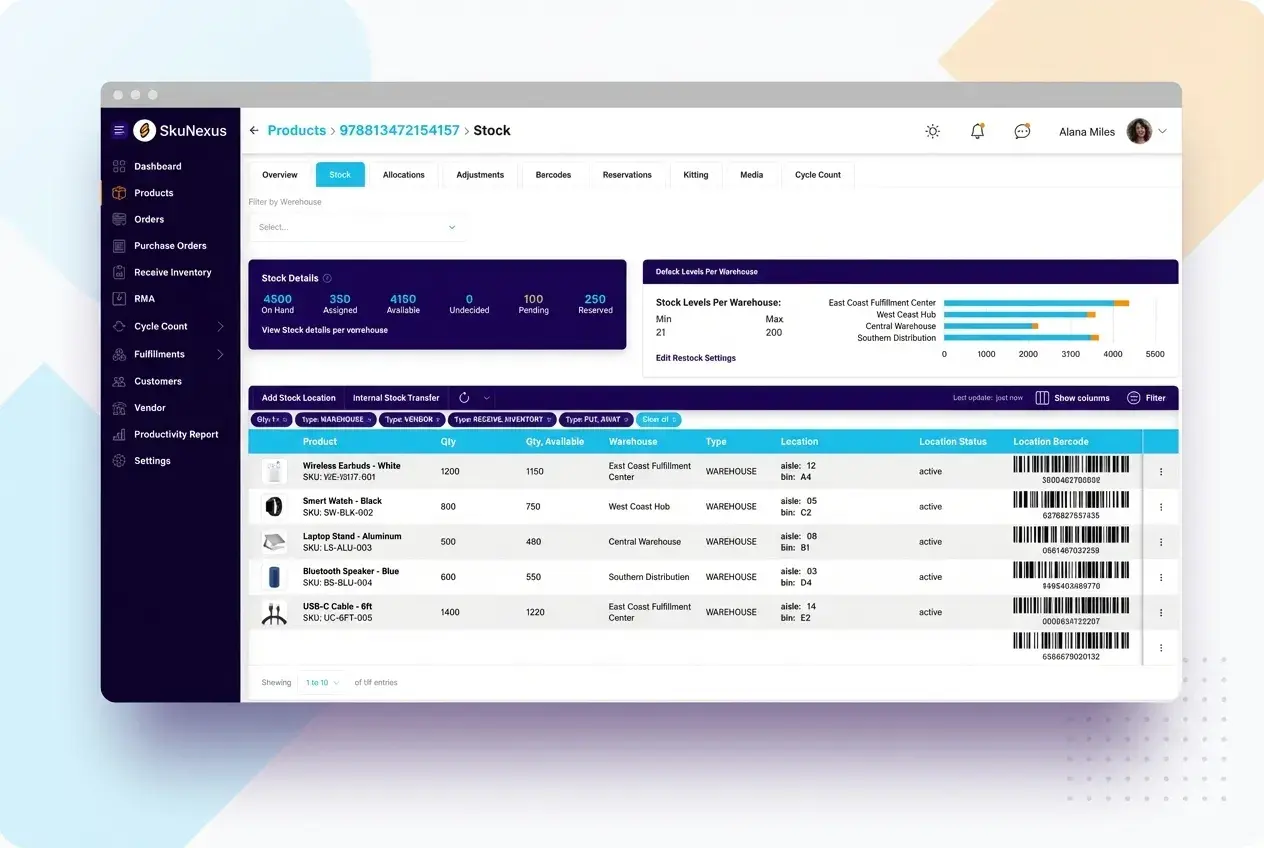
Returns Processing
Receive, inspect, and disposition returned items. Restock, quarantine, or return to vendor — with full audit trail and integration back to the original order.
Each fulfillment task has its own return path. Items from your warehouse follow your return process. Vendor items follow the vendor's process. Both tracked in SkuNexus.
- Receive and inspect returns
- Restock, quarantine, or return to vendor
- Full audit trail per return
- Linked to original order
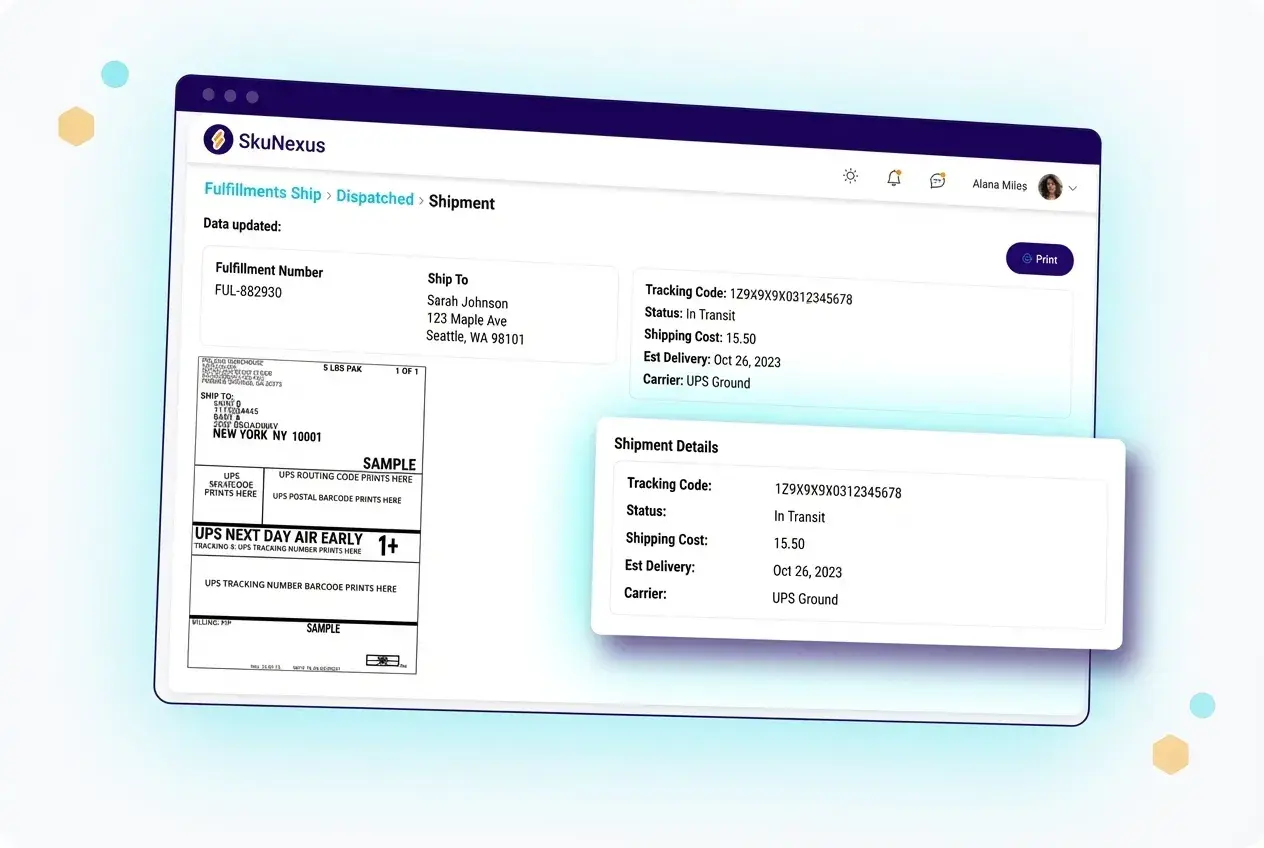
Priority Fulfillment & Carrier Selection
Express orders, VIP customers, or perishable items can be flagged for priority handling. They move to the front of the queue automatically.
After routing, SkuNexus handles carrier selection and label generation. Rate shopping across carriers finds the cheapest or fastest option.
- Priority queues for express and VIP
- Carrier rate shopping
- Automatic label generation
- Full lifecycle visibility
Why Merchants Choose SkuNexus for Fulfillment
Split Fulfillment Isn't an Add-On — It's Core
Most platforms treat split fulfillment as an edge case or don't support it at all. SkuNexus was built for it. Half-warehouse, half-dropship on the same order is standard functionality.
You're the only person that's come to us with split order management and split inventory.
One System From Order to Delivery
SkuNexus isn't just an OMS that hands off to a WMS. It's the entire fulfillment stack in one platform. No integration points, no sync delays.
3PL-to-In-House Transition Support
More merchants are bringing fulfillment back in-house. SkuNexus supports the hybrid period: some SKUs at the 3PL, some in your warehouse, some with vendors. The routing rules evolve with you.
A 150-year-old premium ice cream brand selling DTC, wholesale, and through national retail partners.
⚠️ The Challenge
✅ The Solution
📈 The Results
"Our Smoothest Peak Season Ever"
Connects to Everything You Already Use
Native integrations with leading eCommerce platforms, shipping carriers, and accounting tools.
Integrations



Still Splitting Orders Manually?
If you sell from both your warehouse and vendors, manual splitting is your biggest time sink.
| Manual Fulfillment | SkuNexus |
|---|---|
| ✕ Manually split every mixed order | ✓ Automatic split across sources |
| ✕ Email vendors for each dropship | ✓ Automated vendor notifications |
| ✕ Track shipments in spreadsheets | ✓ All tracking in one system |
| ✕ Returns go to a black hole | ✓ Returns tracked against original order |
| ✕ OMS + WMS + shipping = 3 systems | ✓ One system, order to delivery |
| ✕ 3PL transition is all-or-nothing | ✓ Hybrid fulfillment during transition |
Split fulfillment isn't a luxury feature — it's how modern eCommerce operates. If your system can't handle it, you're leaving money on the table.
Free demo • No credit card required
Frequently Asked Questions About Fulfillment Management
Fulfillment management software orchestrates every step between order received and package delivered - routing each order to the right destination, directing warehouse picks, verifying items at packing, generating shipping labels with optimal carrier rates, and pushing tracking back to the customer. It turns "how do we ship this" from a manual judgment call into an automated, scan-verified workflow.
Without fulfillment software, the process looks like this: someone reviews the order, checks if items are in stock, walks to the warehouse, finds the products, brings them to a packing table, manually selects a carrier, types in the address, prints a label, and marks the order as shipped. Every step is a chance for error and a bottleneck when volume spikes. SkuNexus handles fulfillment end-to-end: the Auto-Decision Engine routes orders, the WMS directs pick and pack with scan verification, and shipping labels generate automatically with the best carrier rate selected - achieving zero human decision-making from order to label.
Split fulfillment means one customer order ships from multiple locations - some items from your warehouse, others from a vendor via dropship, others staged for store pickup. It's hard because most systems treat an order as a single, indivisible unit. When you need to split it, someone has to manually create separate fulfillment tasks, track them independently, manage separate shipping labels, and reconcile all the tracking numbers back to one customer-facing order.
The manual workaround usually involves duplicating the order in the system, assigning different items to different "orders," and hoping someone remembers to merge the tracking when everything ships. During peak season, this process breaks. SkuNexus evaluates each line item independently through the Auto-Decision Engine, splits the order at the line-item level automatically, runs each fulfillment path in parallel (warehouse, vendor, and store simultaneously), and converges all tracking numbers back to the customer through the sales channel without manual intervention.
The system evaluates each line item on an order against your configurable routing rules and assigns it to its fulfillment destination in milliseconds. Rules run in priority order: Is the item in stock at the nearest warehouse? Ship from there. Is it a dropship-only product? Route to the vendor. Did the customer select store pickup? Send it to the store's pick list. Is it a VIP order or express shipping? Bump it to the front of the queue.
You define the rules once and the system executes them on every order, every time, with perfect consistency. No more relying on a person to make the right call under pressure during a holiday rush. The rules can combine any criteria: item attributes, customer location, channel, order value, inventory availability, vendor assignment, shipping speed, or custom fields. SkuNexus routes based on any combination of these factors, and each line item on an order can route to a different destination independently.
Yes. BOPIS (buy online, pick up in store) is a fulfillment path that routes to a retail store location instead of a shipping carrier. When a customer selects in-store pickup, the order routes to the selected store, generates a pick task for store staff, sends the customer a "ready for pickup" notification once items are staged, and closes the order when the customer confirms receipt. Every step is tracked with status updates visible to both the operations team and the customer.
The complexity comes when BOPIS exists alongside warehouse shipping and vendor dropship on the same order. A customer might buy three items: one ships from your warehouse, one dropships from a vendor, and one they'll pick up at the local store. SkuNexus handles all three fulfillment paths on the same order simultaneously - BOPIS, warehouse shipping, and vendor dropship executing in parallel with independent tracking for each.
As each fulfillment piece ships, the system captures the tracking number and carrier information and pushes it back to the originating sales channel automatically. If a single order split into two shipments - one from your warehouse via FedEx and one dropshipped from a vendor via UPS - the customer sees both tracking numbers on their Shopify or Amazon order page without anyone manually entering them.
This automation is critical because manual tracking entry doesn't scale. At 50 orders per day, someone can probably keep up. At 300 orders per day with split fulfillment across multiple warehouses and vendors, manual tracking entry becomes a full-time job that's still behind by end of day. SkuNexus pushes tracking to Shopify, Amazon, eBay, Walmart, and other connected channels the moment a shipment is created - the customer's experience is seamless regardless of how many fulfillment paths ran behind the scenes.
A fulfillment platform is software you run in your own warehouse to manage pick, pack, and ship operations. A 3PL (third-party logistics provider) is a company that does the physical fulfillment for you in their warehouse using their staff and their systems. One is software, the other is a service.
Many growing merchants start with a 3PL when they're small because the upfront investment in warehouse space, staff, and software is too high. As they scale, the per-order fees from the 3PL start eating into margins and the lack of control over their fulfillment quality becomes painful. The transition from 3PL to in-house fulfillment is when a fulfillment platform becomes essential. SkuNexus is the platform merchants use when they're ready to bring fulfillment in-house with the same scan-verified workflows, routing intelligence, and operational visibility that a professional 3PL uses internally.
If your current process involves printing orders from Shopify, walking the warehouse to find products, eyeballing the items to make sure they're right, manually selecting a carrier, and typing addresses into a label printer - you need fulfillment software. A shipping tool like ShipStation only handles the last step: generating the label. Everything before the label is where errors happen, time is wasted, and wrong items get shipped.
The typical breaking point is 50-100 orders per day. Below that, manual processes are annoying but survivable. Above that, the error rate, the labor cost, and the customer complaints from wrong shipments start compounding. One prospect described their process as printing out orders and going, picking, packing - entirely manual with no verification step. Their error rate was costing them more in returns and reshipping than fulfillment software would cost. SkuNexus replaces the entire workflow from order arrival through verified shipping label.
Still have questions?
Talk to Our TeamYour Fulfillment Should Be as Flexible as Your Business
You sell from multiple sources because your business demands it. Your fulfillment system should handle that complexity automatically.